Professor Moodley’s research interests lie in analytical environmental chemistry where she is involved in analyzing for organic pollutants in environmental matrices. Her research also focuses on developing synthetic and bioadsorbents for the removal of organic pollutants from wastewater and also developing photocatalysts for the photodegradation of the adsorbed pollutants. She holds a PhD in Chemistry from the University of KwaZulu-Natal, she is C2 rated, and has graduated 25 Masters and PhD students and published over 70 papers in this field. Due to her expertise she was approached by 50/50 to carry out analysis of environmental samples close to a waste treatment site in Hillcrest which was emitting noxious odours. Professor Moodley is a well-versed lecturer with over 15 years of experience in teaching and research.
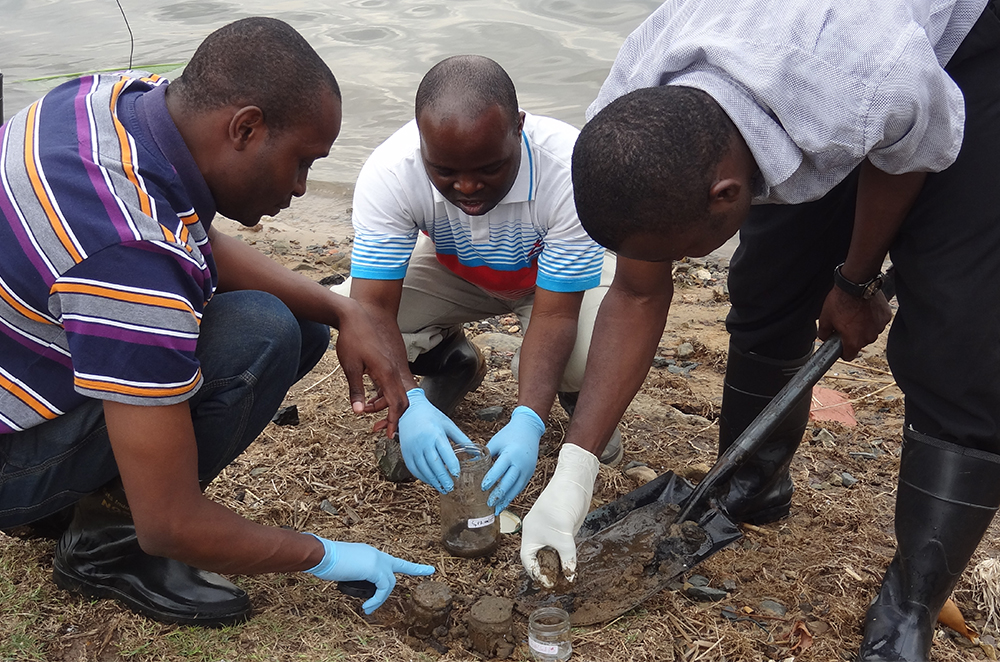
Prof Moodley’s research group investigates organic pollutants present in environmental matrices such as sediment, soil and water. Organic pollutants such as pesticides (mirex, endrin, DDT and its metabolites, etc), polychlorinated biphenyls (PCBs), polycyclic aromatic hydrocarbons (PAHs), polychlorinated dibenzo-p-dioxins (PCDDs), as well as emerging contaminants such as illicit drugs, pharmaceuticals (including their metabolites) and personal care products (PPCPs) are some of the types of pollutants that have been investigated.
Currently they are working on analysing for selected pharmaceuticals (antibiotics, hypertension, diabetes, endocrine disruptors, etc) in a wastewater treatment plant in Pietermaritzburg as well as the plant reuse water. This project started during the COVID-19 pandemic and samples were collected during the 4th and 5th waves of the pandemic to determine any correlations between the concentrations of the pharmaceuticals found in the effluent and the number of COVID-19 cases.
The group is about to being a project looking at different types of endocrine disruptors in river samples in KZN. Endocrine disruptors are known to have detrimental effects on aquatic species affecting particularly the reproductive organs, hence there is a need to monitor the concentrations of endocrine disruptors in the environment. They have investigated the absorption of PCBs on to soil particles and are now also looking at how organic pollutants such as polychlorinated biphenyls (PCBs) and selected pharmaceuticals adsorb to microplastics which then are transported to other areas. These microplastics may also be ingested by aquatic species which may then transfer the organic pollutants to them. The kinetics and mechanism of adsorption is focused on in these studies.

Professor
Chemistry
moodleyb3@ukzn.ac.za
031 260 2796