How can research into stressed freshwater crabs and farmed abalone help universities understand and improve student success?
For Professor André Vosloo of the University of KwaZulu-Natal’s (UKZN) College of Agriculture, Engineering and Science (CAES), the answer lies in identifying patterns, interpreting data and using evidence to anticipate challenges before they become problems.
In his inaugural lecture, Vosloo traced his academic journey from studying the physiological responses of aquatic animals to exploring how data-driven approaches can inform teaching and learning in Higher Education.
A Full Professor in the Discipline of Biological Sciences, Vosloo has built his research career around stress physiology, developing and applying biomarkers to predict the health, disease or growth of organisms before adverse effects become apparent at individual or population level.
After obtaining a BSc in Zoology and Biochemistry from what is now North-West University (NWU), Potchefstroom campus, his MSc was upgraded to a PhD in recognition of novel approaches to measuring stress in freshwater crabs.
Following 14 years at NWU, he joined UKZN’s then School of Biological and Conservation Sciences as a senior lecturer in April 2007. He was promoted to Full Professor in 2024.
Vosloo’s research has evolved from investigating individual stress markers under controlled laboratory conditions to using high-dimensional metabolomic profiling to develop a more comprehensive understanding of how organisms respond to environmental pressures. His work has found applications in metal-disturbed aquatic systems in mining regions and environmentally stressed estuaries and aquaculture systems, including research involving crabs, abalone, fish, and mammals.
With approximately 40 scientific papers, four book chapters, two books and two patents, among other scholarly outputs, his research has attracted about 1 550 citations. He has graduated 15 master’s and eight doctoral students, reflecting his contribution to postgraduate research and the development of scientific expertise.
The central idea connecting Vosloo’s research and teaching and learning leadership is the potential of data to provide early warning signals.
“In animal physiology, identifying changes in biomarkers can help researchers anticipate problems before they become visible at organismal or population level,” said Vosloo. He proposed applying similar principles to Higher Education by using student, module and academic analytics to identify emerging learning challenges and inform timely interventions.
Rather than relying primarily on final assessment results, which reveal difficulties after they have occurred, he advocated examining dynamic indicators of student engagement and agency. “Digital information, analysed responsibly, can help universities better understand learning patterns and identify where additional support may be needed,” he said.
“The aim is to move away from static, deficit-based profiling towards a more responsive approach that recognises changing student circumstances and learning behaviours. Richer data can enable academics and university managers to make more targeted decisions, strengthen student resilience and improve academic outcomes.”
Vosloo’s interest in this area has developed alongside his growing leadership role in teaching and learning. Having held leadership positions since 2010, he shifted towards teaching and learning management, empowerment and leadership at various institutional levels from 2020. He was recognised as a UKZN Distinguished Teacher in 2024.
In 2026, he was appointed the inaugural Head of Teaching and Learning in the School of Agriculture and Science (SASc) and is currently developing a harmonised teaching and learning framework to be implemented across the School’s 10 disciplines, with the aim of strengthening institutional approaches to student learning and success.
Increasingly, Vosloo’s energies have focused on the opportunities and challenges presented by generative artificial intelligence (AI) in Higher Education. His work focuses on helping institutions navigate technological change while protecting academic integrity and the value of university qualifications. As a member of UKZN’s AI thought leadership forum, he co-authored the University’s AI Guidelines and resulting governance paper.
“The rapid development of generative AI has raised difficult questions about assessment and how universities can ensure that graduates demonstrate their own knowledge and capabilities,” said Vosloo. “Established approaches to assessment and the function of Higher Education must adapt to this changing environment.
“At the same time, there is huge potential for big data and generative AI to act as cognitive partners in teaching and learning, provided their use is guided by appropriate institutional governance and ethical principles.”
Vosloo cautioned against the spread of misinformation, convincing deepfakes and AI-generated content that can obscure the distinction between reliable evidence and false claims.
Stressing the importance of critical thinking, he urged students to examine information carefully rather than accept claims uncritically: “Interrogate the data and critically evaluate it before reaching a conclusion,” he said.
After the completion of his lecture, Vosloo was congratulated on his appointment to UKZN’s professoriate by Professor Fhatu Mudau, Deputy Vice-Chancellor and Head of the College of Agriculture, Engineering and Science.
Words: Sally Frost
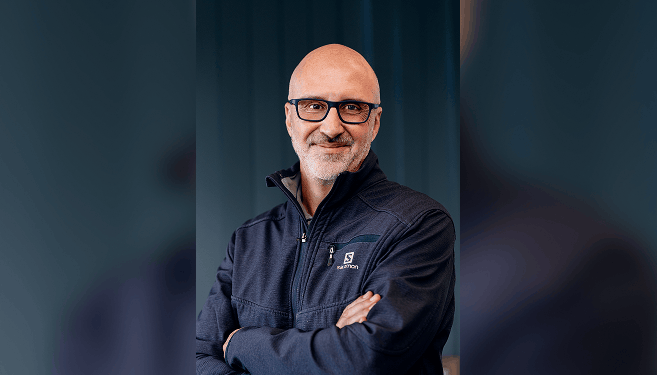
Photograph: Supplied