A global study, incorporating more than 142 researchers from 32 countries, mapping how closely flowering plants and their pollinators depend on each other, has been co-authored by the University of KwaZulu-Natal’s (UKZN) Professor Michael Lattorff.
Lattorff is an expert on bee health, pollination ecology and the genetics and reproductive biology of social insects.
Published in Nature Ecology & Evolution, the study is the largest global analysis of plant-pollinator interactions and reveals that climate is the main force shaping pollination worldwide, challenging the classic expectation that pollination becomes more specialised towards the tropics.
The study was led by researchers from Charles University in Prague (CUNI) and the Biology Centre of the Czech Academy of Sciences (BC CAS).
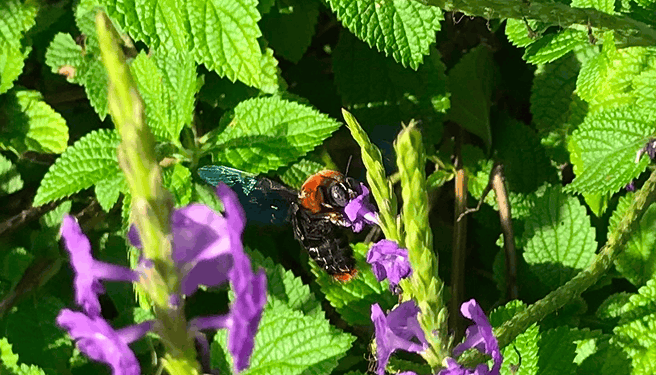
Much of the green world depends on animals carrying pollen from flower to flower. Pollination enables plants to reproduce, maintain genetic diversity, and produce fruits and seeds that feed countless animals. Flowers, in turn, provide nectar and pollen that sustain an astonishing variety of pollinators. Bees may be the best-known pollinators, but flies, beetles, butterflies, moths, wasps, and even birds and lizards, also fill that role. Our own food supply relies on these partnerships, particularly for many fruit, vegetable, nut, and oil crops.
Many plants have specialised relationships with particular pollinators, while others are visited by a range of generalist insects. Many ecologists expect that specialised pollinator-plant relationships are more common in tropical areas due to the greater number of interacting plant and animal species there. But this assumption of a latitudinal gradient in specialisation remained largely untested due to a lack of appropriate data.
To find out whether specialised partnerships are indeed more common in the tropics, researchers compiled 3 415 plant-pollinator networks from 162 studies. The dataset, representing years of fieldwork around the world, contained more than 110 000 links among 5 343 pollinator and 6 126 plant species from all major terrestrial biomes, from tropical forests and savannas to Mediterranean shrublands, temperate forests and meadows, and subarctic tundra.
“No single team could study pollination on this scale,” said lead author Dr Sailee Sakhalkar. “By combining the work of researchers from across the world, we could finally see both the global picture and the enormous variety within it.”
The surprising result was that more specialised ecological relationships were not more common in the tropics. While specialisation often reached its highest levels near the northern boundary between the tropics and subtropics, each group of plants and pollinators followed their own patterns. Moreover, rather than latitude, the researchers found that temperature and rainfall better explained global patterns in specialisation, and the effects differed greatly among pollinator groups.
These findings are relevant to how plants and animals will respond to a changing climate, which will also likely affect crop production, particularly crops with specialised pollinator relationships. Rising temperatures and altered rainfall can change where species live, when plants flower, and when pollinators are active. They can therefore redraw the map and calendar of encounters between plants and pollinators.
Said Lattorff: “Southern Africa remains critically understudied for pollination networks. The precipitation regimes, seasonality, and distinctive pollinator communities likely generate specialisation patterns different from those identified in the Northern Hemisphere, highlighting the need for expanded Southern African network data to reliably predict regional responses to climate change,”
Lattorff, whose academic career took him from his native Germany to southern Africa as part of collaborations with Rhodes University on South African honeybees, worked at the International Centre of Insect Physiology and Ecology (icipe) in Kenya for five years before joining UKZN in 2024. His recent research has focused on bee health, pollination ecology and the conservation of pollinators, investigating diseases and parasites, plant-bee interactions, and the impacts of climate and agricultural practices on bees.
Words: Christine Cuénod
Photograph: Supplied