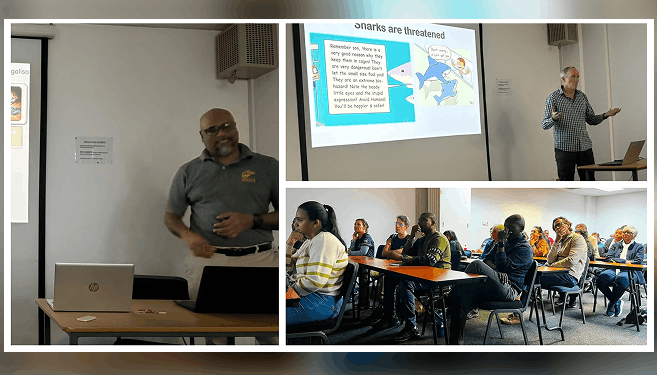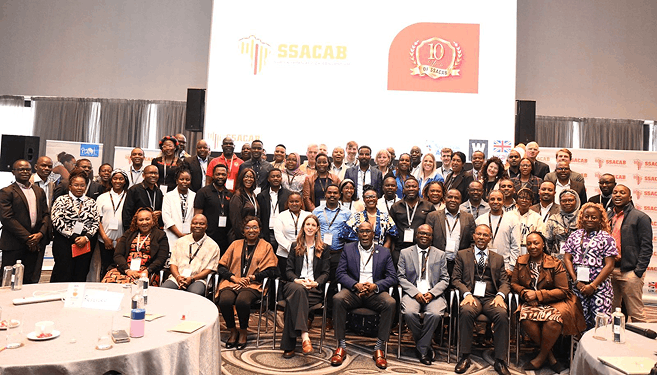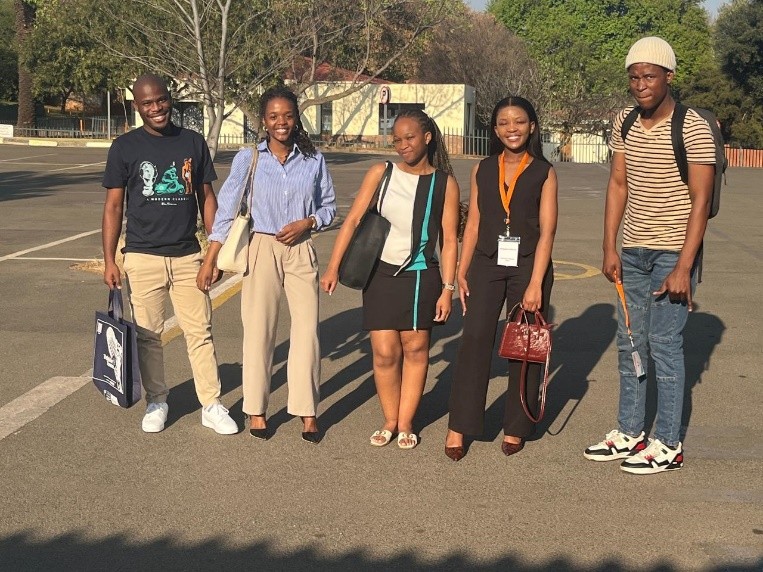
Five Geography Honours students based on the Howard College campus proudly represented UKZN at the Society for South African Geographers (SSAG) 2025 Student Conference, hosted by the University of Johannesburg, where, accompanied by Dr Njoya Ngetar, they presented their research, engaged with fellow South African geographers, and used the opportunity to explore diverse geographical features of the country.
Discussions at the conference focused on the role of geography and sustainability in South Africa and globally, and included a gala dinner, as well as a post-conference guided hike in the Majakaneng township, situated within the Magaliesberg Biosphere in the North West Province and boasting spectacular natural beauty, historical and colonial artefacts, and community conservation initiatives. The site’s streams, escarpments, and indigenous vegetation provided students with insight into physical and cultural geography, as well as environmental stewardship.
Using the travel time between KwaZulu-Natal and Gauteng, and Gauteng and the North West Province, to analyse and discuss various geographical features, they were able to appreciate Mooi River’s landslide mitigation structures and contour ploughing, Van Reenen’s Pass erosion and high-altitude geology, Swinburne’s prominent rock formations shaped by faulting and weathering, Harrismith’s varied geological structures that embody the results of tectonic activity and continental drift, while Hartebeestpoort Dam’s location prompted discussion of landforms shaped by tectonic forces, and land use and human-environment interaction.
Mr Sibusiso Makhubela presented his study on the impacts of gentrification on the long-established residents of the Greater Point area, explaining the term, coined by sociologist Ruth Glass, as the phenomenon where the working class or poor are displaced by the upper class due to capital inflating the cost of living. By understanding the importance of place attachment, Makhubela argues that people value their locales more for the role they play in shaping their identity, cultural values, and the meanings they hold.
Ms Sithokozile Mhlambi presented her Honours research on a Flood Risk Assessment and Disaster Preparedness in the uMnambithi or Ladysmith Central Business District, in which she explores how recurring flooding driven by the area’s physical characteristics can be addressed through Geographic Information Systems (GIS) and community engagement, promoting inclusive disaster preparedness and spatial resilience.
Ms Sibusile Khumalo presented her research titled “Water Security Among Women in the Nhlanhleni Area”, in which she critically examines the challenges faced by women in Nhlanhleni in accessing safe, reliable, and clean water.
Mr Lusanda Shange presented his Honours research on investigating the perceived socioeconomic and environmental impacts of river sand mining in the Umkhomazi River, highlighting the need for phenomenology in addressing complex socio-ecological dynamics and calling for sustainable human-nature relationships.
During the Sustainable Waste Management session, Ms Enhle Hlubi presented her research on evaluating the socioeconomic and environmental impacts of improper waste management in townships, as well as the role of these communities in proper waste management, with a focus on the Edendale township.
The five students highlighted the value of the SSAG Student Conference, citing the networking opportunities it presented, the diverse student projects it exposed them to, the value it
demonstrated of geography driving practical, community-based solutions, and the inspiration it provided to continue growing in their research and professional careers. The conference excursions also integrated theoretical and field-based learning, effectively demonstrating to students how to link these. Presenting their research and hearing from others working on similar themes enhanced their understanding of the collaborative nature of research, provided them with new knowledge and perspective, and enabled them to receive constructive feedback on their research projects.
The group expressed appreciation to Ngetar, whose guidance and support deepened their learning during the journey. Attending the conference enabled them to connect classroom theory with real-world application and strengthened their research, analytical, and collaborative skills, reinforcing the value of experiential learning in shaping future geographers.
Words: Christine Cuénod
Picture: Supplied.