Dr Khanyisile Ngcongco says the conferral of her PhD in Biochemistry from the University of KwaZulu-Natal (UKZN) marks the completion of a four-and-a-half-year journey culminating in research highlighting the potential of indigenous South African plants in sustainable nanotechnology.
Ngcongco acknowledged that the road to completing her PhD was not always easy. Setbacks, long nights in the laboratory and countless revisions tested her determination, but she said the experience had taught her that success was not about having all the answers from the beginning, but about asking better questions, embracing continuous learning and refusing to give up when challenges arose.
She chose to pursue her PhD at UKZN because of its strong reputation as a research-intensive university and its commitment to scholarship, addressing real-world challenges. She was supervised by Dr Karen Pillay and co-supervised by Dr Anushka Govindsamy.
Her research explored two approaches to producing metal nanoparticles: using extracts from South African medicinal plants and using bacteria that naturally produced nanoparticles. The nanoparticles were then evaluated for their antibacterial and antioxidant properties as well as their ability to break down dye pollutants in water.
Among the nanoparticles tested, those produced using local indigenous medicinal extracts revealed the greatest potential, showing effective antibacterial and antioxidant activity and the ability to break down dye contaminants. In particular, the green-synthesised nanoparticles effectively degraded methyl orange, a model dye pollutant commonly used in environmental studies.
“This work is important because it suggests that indigenous medicinal plants could be used to develop eco-friendly nanomaterials for water treatment and may also have future uses in health and medicine,” said Ngcongco.
Her interest in the field was based on the growing need for sustainable technologies capable of addressing pressing environmental and public health challenges. South Africa’s exceptional biodiversity, including its wealth of indigenous plant species, presented an opportunity to explore resources that remained underutilised in nanotechnology and advanced scientific applications.
Ngcongco was particularly interested in green nanotechnology, where naturally occurring phytochemicals can be used to produce metallic nanoparticles.
Her findings demonstrate the value of an indigenous South African species, which are known medicinal plants, as a source of useful nanomaterials.
“My research gives added value to local biodiversity as it shows that native plants can contribute not only to traditional healing but also to modern science and technology,” she said. “Completing this PhD has reinforced my belief that scientific innovation can emerge from our own natural biodiversity and that meaningful discoveries often begin by looking at familiar resources in new ways.”
Said Ngcongo: “I am deeply grateful to my supervisors, family, friends and colleagues, whose support, encouragement, guidance and belief in me carried me through the most demanding moments,” she said. She also paid tribute to family members who passed away at the beginning of her PhD journey, saying she knew they would have been incredibly proud to see her reach the milestone.
Ngcongco sees her future in industry, specifically in a research-focused role where she can apply the skills and expertise developed during her PhD to contribute to meaningful research, solve real-world problems and continue growing as a scientist.
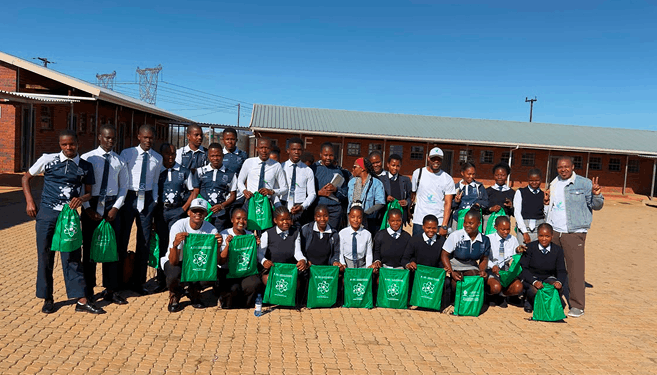
Away from research, she enjoys a variety of TV shows, gardening and spending quality time with family and friends. She also tutors high school learners in Mathematics and Science, an activity she finds both enjoyable and rewarding because it allows her to share her passion for learning.
“I hope my journey will encourage others to embrace curiosity, persevere through challenges and recognise the value of their own potential,” she said.
Words: Sally Frost
Photograph: Albert Hirasen