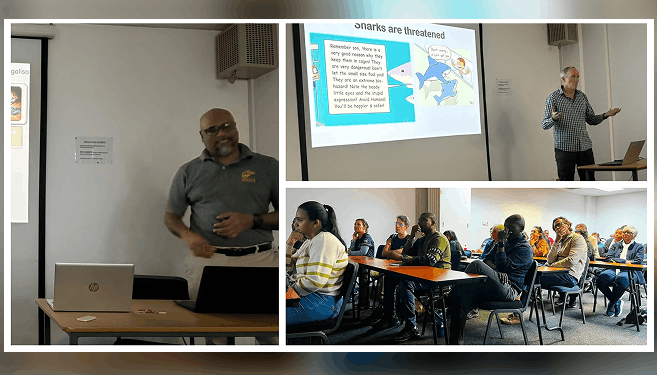
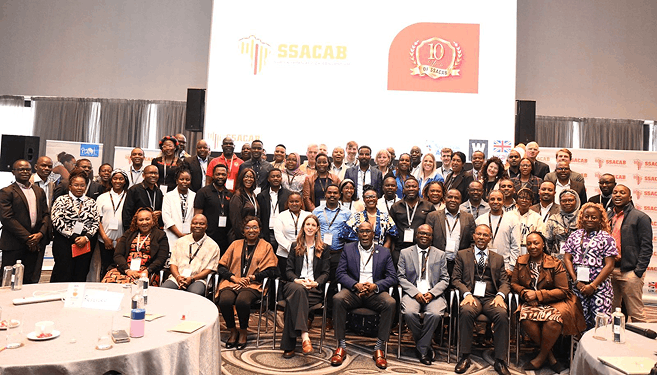
A collaborative five-day workshop, hosted on UKZN’s Pietermaritzburg campus, represented a joint initiative between Gene4All Spain, United Kingdom-based TReND in Africa and UKZN to strengthen scientific capacity and collaboration in molecular and developmental biology through high-quality, hands-on training.
The Zebrafish for Disease Modelling: Genome Editing Workshop was a step in providing accessible and advanced education in CRISPR/Cas9 and transgenesis techniques for researchers across Africa and beyond. These genome-editing technologies allow scientists to precisely cut and modify DNA at specific locations. Using research models such as zebrafish, scientists can switch genes on or off or introduce disease-related changes, helping them study human disorders and test potential therapies.
These fish, whose genes are similar to 70% of human protein-coding genes and which have counterparts to 84% of human disease-associated genes, are ideal for biomedical research in terms of modelling human diseases and testing therapies, thanks to their rapid development and the production of transparent embryos that are easily observable.
UKZN’s Zebrafish Research Facility (ZRF) on the Pietermaritzburg campus is a dedicated zebrafish husbandry, breeding and experimental platform that supports multidisciplinary, cutting-edge biomedical and environmental research (including disease modelling and toxicology) and trains students and researchers in these globally competitive techniques.
Workshop training was conducted by leading experts in the field of genome editing: Dr Vincenzo Di Donato, Executive Director of Gene4All in Spain; Professor Thomas Auer from the University of Fribourg, Switzerland, also working with Gene4All and TReND in Africa; and Dr Filippo Del Bene and Dr Karine Duroure from the Institute de la Vision at Sorbonne University in France.
Professor Carola Niesler, a biochemist with expertise in stem cell research and regenerative medicine at UKZN, facilitated and hosted the workshop. She explained that its purpose was to introduce the concept of genome editing using zebrafish to those unfamiliar with it, to expand on the concept for those already familiar with it and to provide a platform for growing future collaborative initiatives. Most importantly, participants will now be able to perform their own genome editing and transgenesis experiments in the future – a real asset for the UKZN research environment.
Di Donato explained the importance of equitable access to genetic technologies, as genome editing has the potential to cure diseases, combat vector-borne transmission, and enhance agriculture. African genomes hold important information for global health, but they are significantly under-researched, and African scientists participate minimally in genome-editing-driven innovation.
“The idea is to train local faculty so the knowledge is based there and spread at the local level, so these centres can become training centres for neighbouring universities and countries,” said Di Donato, who emphasised that the success of these centres requires local institutional and governmental involvement.
“By empowering local researchers who find importing transgenic zebrafish a major challenge, we’re not only building skills but also establishing a local facility for genetic studies, serving South Africa and other countries eager to use zebrafish as a genetic model,” said Auer.
17 researchers and students from UKZN, Stellenbosch University, the University of Cape Town, and Merck, participated in the training, which involved hands-on experience using CRISPR/Cas9 and Tol2-based transgenesis, from design and microinjection to phenotypic and genotypic validation. The course combined expert lectures, laboratory rotations, and interactive presentations designed to build both technical expertise and conceptual understanding.
The hosting of the workshop was made possible by sponsorship from and partnership with Merck, The Company of Biologists, the UKZN Foundation, Tecniplast, GenScript, Synthego, UKZN’s School of Agriculture and Science, the National Research Foundation, and Yaksha Scientific.
Words and photograph: Christine Cuénod