The University of KwaZulu-Natal (UKZN) Marine Life Club (UMLC) is a student-led organisation within the School of Agriculture and Science that fosters a vibrant community of Marine Biology students at UKZN and promotes academic excellence, professional development, and a passion for marine conservation. The club provides a platform for students to connect, learn and gain exposure to opportunities beyond the classroom through educational trips, networking events, conservation initiatives, and community engagement activities.
The UMLC was established to bridge the gap between theoretical learning and practical experience. While Marine Biology students spend a significant amount of time developing scientific knowledge through lectures, laboratory sessions, and research projects, the club recognises the importance of exposing students to the industries, organisations and professionals that shape the marine sector. Through its activities, UMLC seeks to inspire students, broaden their career perspectives, and equip them with the skills and connections needed to succeed in the field of marine science.
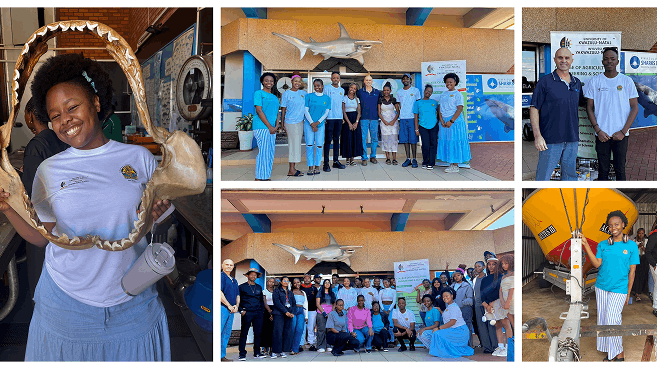
As part of this vision, UMLC recently organised an educational visit to the KwaZulu-Natal Sharks Board (KZNSB) in Umhlanga. The excursion brought together undergraduate and postgraduate students interested in marine science and conservation. During the visit, students gained first-hand insight into the work carried out by the KZNSB in protecting beach users, conducting shark-related research and contributing to the management and conservation of South Africa’s marine resources. Students had the opportunity to view research equipment, shark specimens, biological samples, shark safety gear, boats, nets, and drumlines while learning about the scientific and operational aspects of the organisation.
This initiative aligns strongly with the University of KwaZulu-Natal’s strategic goals of advancing student success, strengthening research and innovation, and fostering meaningful partnerships that contribute to societal and environmental impact.
A highlight of the visit was the opportunity for students to engage directly with marine professionals and explore the diverse career pathways available within the marine and environmental sectors. Students were encouraged to build professional networks and were introduced by Professor Matt Dicken (Acting Head of Research) to opportunities available through organisations such as the South African Network for Coastal and Oceanic Research (SANCOR), which plays an important role in supporting marine and coastal research in South Africa.
According to UMLC President Mr Thembinkosi Cebekhulu, the primary aim of the excursion was to expose students to the practical side of marine science and help them build valuable professional connections.
“As a club, we wanted students to see how the knowledge they gain in lectures is applied in real-world conservation and research settings. The visit provided an opportunity to engage with marine professionals, learn about career pathways, and gain inspiration for their future careers in marine science. We believe experiences such as these are essential in developing well-rounded marine scientists and conservation leaders,” he said.
Beyond the educational component, the trip provided students with an opportunity to strengthen relationships through team-building activities at Umhlanga Beach.
The experience demonstrated the value of experiential learning and showed students how concepts taught in the classroom are applied in real-world conservation and research settings.
Marine Biology student Mr Nhlakanipho Mthimkhulu described the outing as both informative and enjoyable.
“The visit gave me a better understanding of the important role that the Sharks Board plays in marine conservation and research. It was exciting to learn about their operations, the different research opportunities available to honours, master’s and PhD students, and the professional diving certifications that are valuable in the marine science field. I also enjoyed meeting fellow Marine Biology students and participating in the interactive activities. Although I was hoping to witness a shark dissection, the experience was still highly educational and rewarding,” he said.
For many participants, the visit offered valuable career guidance, inspiration and a deeper appreciation for the role of marine scientists in society.
The project also supports UKZN’s commitment to sustainability, environmental stewardship, and producing graduates who are equipped with the knowledge, skills and values needed to address complex global challenges. By connecting students with industry partners and conservation organisations, UMLC contributes to building a collaborative ecosystem that enhances learning, research capacity and community engagement in support of the university’s vision and strategic priorities.
Looking ahead, UMLC plans to continue creating opportunities that support student development and environmental stewardship through activities such as beach clean-ups, research presentations, networking events, conservation awareness campaigns and educational excursions.
The club has also launched a BackaBuddy campaign aimed at supporting environmental initiatives and assisting students facing financial barriers that may affect their academic progress. UMLC remains committed to building a strong and supportive marine science community at UKZN and welcomes collaboration with postgraduate students, staff members, researchers, and industry partners who share its vision of inspiring and empowering the next generation of marine scientists and conservation leaders.
Words: NdabaOnline
Photographs: Supplied