The University of KwaZulu-Natal (UKZN) hosted the TDA2ML Workshop on 18 and 19 June 2026, bringing together 25 staff members and students for an intensive introduction to the rapidly evolving fields of Topological Data Analysis (TDA) and Machine Learning (ML).
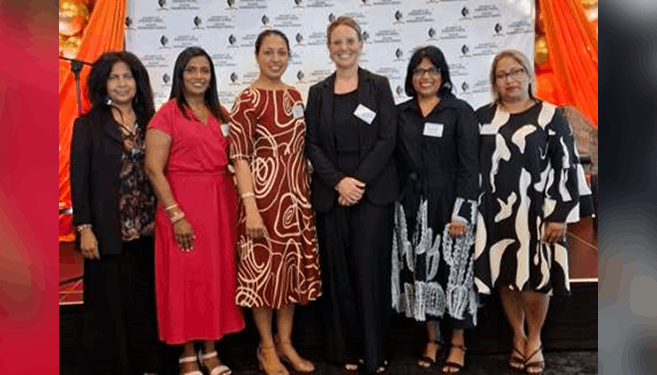
Organised by academic colleagues in the Disciplines of Statistics and Mathematics – Ms Natalie Benschop, Ms Yuvika Singh, Dr Cerene Rathilal and Dr Danielle Roberts – the workshop was made possible through the support of UKZN’s College of Agriculture, Engineering and Science (CAES) and Professor Sunil Maharaj.
The two-day programme provided attendees with both theoretical foundations and practical applications of cutting-edge data analysis techniques, highlighting the growing importance of topology-based approaches in modern data science.
A major highlight of the workshop was the participation of visiting expert Dr Vivien Visaya from the University of Johannesburg. Through a series of engaging presentations and hands-on sessions, Visaya introduced participants to the fundamentals of TDA and demonstrated how topological methods can be used to uncover patterns and structures in complex datasets.
Her opening presentation, titled ‘What is TDA?’, provided an accessible introduction to the field and laid the groundwork for the remainder of the programme. Visaya subsequently guided participants through practical applications of persistent homology and the use of specialised software tools, enabling attendees to gain first-hand experience with techniques used in contemporary topological analysis.
Visaya also facilitated a two-part introduction to the Mapper algorithm, one of the most widely used tools in TDA. Participants explored the algorithm’s applications and learned how it can be employed to visualise and analyse high-dimensional data. Her sessions further examined the relationship between sheaves and persistent homology, prompting lively discussion among attendees and exposing them to advanced concepts at the forefront of current research.
Complementing these presentations were foundational lectures delivered by Rathilal who, through two detailed sessions on persistent homology, provided participants with a solid theoretical understanding of one of the key mathematical frameworks underpinning TDA.
Reflecting on the success of the workshop, Rathilal said: “The aim of the workshop was to make advanced concepts in topological data analysis and machine learning accessible to participants from diverse backgrounds. It was encouraging to see such enthusiasm and engagement throughout the two days, and we hope the experience will inspire further research and collaboration in these exciting fields.”
The programme also featured sessions by Roberts, who introduced participants to the fundamentals of machine learning. Her presentations covered the different types of machine learning, the supervised learning process, model evaluation techniques and commonly used algorithms. These sessions provided valuable insight into how machine learning methods can be integrated with topological approaches to solve complex data-driven problems.
By combining mathematical theory, computational tools and practical applications, the workshop offered a comprehensive learning experience that appealed to participants with a range of academic interests. The interactive nature of the sessions encouraged active participation and provided attendees with opportunities to engage directly with experts in the field.
Beyond the academic programme, participants and speakers gathered at the Royal Natal Yacht Club for an evening of networking and discussion.
The organisers expressed their appreciation to CAES and Maharaj for their vital sponsorship, which made the workshop possible. They also thanked all the speakers for sharing their expertise and contributing to the success of the event.
“The TDA2ML Workshop demonstrates UKZN’s commitment to advancing knowledge in emerging areas of mathematics, data science and artificial intelligence,” said Rathilal. “By exposing participants to innovative analytical techniques and fostering interdisciplinary engagement, the workshop provided a valuable platform for learning, collaboration and future research in an increasingly data-driven world.”
Words: Sally Frost
Photograph: Supplied